Source Chicken Coop for Farms, Manufacturing, and Retail
Find 13 Chicken Coop options featuring automatic feeding systems and hot-dip galvanized steel construction. Buyers can compare 3-tier and 4-tier battery cages with capacities ranging from 120 to 160 heads for poultry farms and manufacturing plants.
Key considerations
Products List


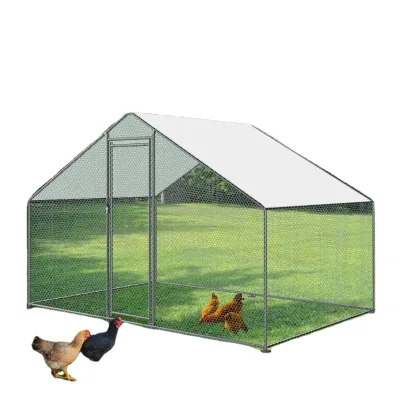
Mobile Chicken Coop for Backyard Breeding
$11000.00 - $12000.00
MOQ: 1 Sets
Shandong Huabang Agricultural and Animal Husbandry Machinery Co., Ltd.

Large Mobile Chicken Coop for Outdoor Breeding
$11000.00 - $12000.00
MOQ: 1 Sets
Shandong Huabang Agricultural and Animal Husbandry Machinery Co., Ltd.


Comprehensive Sourcing Guide
Strategic Sourcing Guide for Automated Chicken Coop Systems
The global demand for efficient poultry infrastructure has driven a significant evolution in Chicken Coop design, moving from traditional static structures to integrated, automated systems capable of supporting large-scale farming operations. For procurement professionals, navigating the market for these specialized assets requires a disciplined approach that prioritizes technical alignment, material integrity, and supply chain reliability. The following guide synthesizes available market data to provide a structured framework for evaluating Chicken Coop suppliers, ensuring that procurement decisions are grounded in verifiable facts rather than speculative claims.
Technical Specifications and System Architecture
When evaluating Chicken Coop systems, the primary focus must be on the architectural design and the integration of core mechanical components. The market currently offers a diverse range of configurations, from single-tier units to multi-tier battery cage systems designed for high-density housing. A critical observation in the current supply landscape is the prevalence of multi-tier designs, specifically three-tier and four-tier models, which are engineered to maximize vertical space and increase headcount per square meter. For instance, specific configurations are documented to support capacities of 120 heads in a three-tier setup and 160 heads in a four-tier arrangement. However, buyers must remain vigilant, as some listings also reference single-tier options, indicating that capacity planning must be strictly aligned with the specific model number and tier configuration selected.
The structural integrity of these systems relies heavily on the material composition. The dominant material observed in high-quality units is steel, specifically treated with a hot-dipped galvanized process. This surface treatment is essential for resisting corrosion in the humid and corrosive environment of a poultry house, where ammonia levels can be high. The material specifications often cite "Hot-DIP Galvanized" as a standard, ensuring longevity and structural stability. Furthermore, the design of the coop often includes customizable dimensions, with standard footprint measurements observed in the range of 72 by 10 by 4 meters, or variations such as 92 by 13 by 4 meters, and larger industrial units reaching 102 meters in length. Buyers should verify that the chosen model's dimensions align with their facility's spatial constraints and that the "Customizable" nature of the coop size is a confirmed capability of the supplier.
Automation and Operational Efficiency
Modern chicken coops are defined by their automation capabilities, which significantly reduce labor costs and improve biosecurity. The core components of these systems typically include an automatic feeding system and an egg collection system. These mechanisms are designed to operate continuously, ensuring that birds receive consistent nutrition and that eggs are collected without human intervention, thereby minimizing stress on the flock and reducing the risk of egg breakage. The feeding system often utilizes a hopper with a capacity of 500kg and may be supported by bucket systems with a capacity of 250 liters, depending on the specific model and scale of operation.
In addition to feeding and collection, the water delivery system is a critical subsystem. Specifications indicate that some advanced units are equipped with two distinct water lines, ensuring redundancy and consistent hydration for the flock. The energy source for these automated systems varies; while some models rely on standard grid power, others are designed to integrate solar energy, offering a sustainable solution for remote or off-grid farms. The integration of these systems is often highlighted as a key feature, with the "Automatic Feeding System" and "Egg Collection System" listed as core components. Buyers must verify that the automation is compatible with their local power infrastructure and that the system can handle the specific load requirements of their flock size, which can range from 600 to 750 chickens depending on the cage configuration.
Compliance, Certification, and Material Standards
In the B2B procurement of agricultural infrastructure, compliance with international quality standards is non-negotiable. The supply chain for chicken coops often references ISO9001 certification, which indicates that the manufacturer adheres to a recognized quality management system. This certification serves as a baseline assurance that the production processes are standardized and that the final product meets specific quality criteria. However, buyers should not assume that every listed product automatically carries this certification; it must be verified through official documentation from the supplier.
Material standards are equally critical. The use of steel is standard, but the specific grade and the thickness of the galvanized coating are often not explicitly detailed in general listings. The "Hot Dipped Galvanized" process is a specific requirement that should be confirmed, as it offers superior protection compared to electro-galvanization. Additionally, the structural standards for the coops often reference specific dimensional models, such as the HB-0687 or hb-98, which dictate the overall geometry and load-bearing capacity. Buyers should request detailed engineering drawings that confirm the material thickness and the specific application of the galvanized coating to ensure the coop can withstand the mechanical stresses of automated feeding and the environmental conditions of the farm.
Cost Drivers and Procurement Economics
The pricing of Chicken Coop systems is influenced by several factors, including the number of tiers, the level of automation, and the total capacity. The observed market price range is broad, spanning from approximately 10 USD to 12,000 USD. This variance reflects the difference between small-scale, single-tier units and large, fully automated, multi-tier industrial systems. The minimum order quantity (MOQ) also varies, with observed ranges from 1 unit to 200 units. For buyers looking to outfit a large farm, negotiating based on higher volume orders can significantly impact the unit cost.
Other cost drivers include the packaging requirements and the logistics of delivery. The standard packaging for these heavy steel structures is often a wooden box, which can be customized based on the buyer's request. The weight of the units is a significant factor in shipping costs; for example, specific models are noted to weigh around 60kg to 80kg, while larger industrial units will naturally be heavier. Buyers must factor in the "Single package size," which can be substantial, such as 190x28x21 cm for smaller components, to calculate freight charges accurately. It is also important to note that the "Stock" availability is often listed as "Whole Year," suggesting that suppliers maintain inventory for immediate dispatch, which can reduce lead times and mitigate supply chain disruptions.
Supplier Evaluation and Geographic Considerations
When evaluating potential suppliers, geographic origin plays a role in logistics and regulatory compliance. The primary regions of origin for these products include Hebei, Shandong, and Henan provinces in China. Suppliers from these regions, such as those operating in Shandong Weifang or Henan, often have established manufacturing ecosystems for agricultural machinery. The brand names associated with these products, such as "Great Farm," indicate a level of market presence, but buyers should conduct due diligence to ensure the brand is legitimate and that the supplier has a track record of fulfilling orders.
The supplier's ability to provide design support is a crucial differentiator. Many suppliers offer "Free Chicken Cage Layout" services, which can be invaluable for optimizing the farm's layout to maximize efficiency. This service implies that the supplier has engineering expertise and can assist in planning the installation. Buyers should assess the responsiveness of the supplier's technical team and the depth of the layout design provided. Additionally, the warranty period is a key indicator of supplier confidence; a standard warranty of 1 Year is observed in the market, but buyers should clarify what specific components are covered and the terms for claim resolution.
Quality Control and Long-Term Procurement Strategy
Ensuring the long-term viability of the investment requires a robust quality control strategy. The condition of the product is typically listed as "New," but buyers must verify the manufacturing date and the storage conditions of the inventory. The "Stock" availability of "Whole Year" suggests a continuous production cycle, but buyers should confirm that the units they receive are not overstocked or stored in conditions that could compromise the galvanized coating.
For long-term procurement, the modularity and scalability of the system are important considerations. The "Animal Cage Type" is often categorized as "a Type" or "other," indicating that customization is possible. Buyers should plan for future expansion and ensure that the chosen system can be easily expanded or modified. The "Number of Material Lines" and "Number of Water Lines" should be evaluated to ensure they meet current needs while allowing for future growth. Finally, the application of the coop, whether for "Farms," "Manufacturing Plant," or "Retail," should align with the intended use case. A system designed for a large-scale farm may not be suitable for a retail setting, and vice versa. By carefully matching the technical specifications to the operational requirements, buyers can ensure a successful procurement outcome that delivers value over the lifespan of the equipment.
FAQs
What customization options are available for chicken coops?
Customization is available for Chicken Coop layouts and dimensions. Suppliers offer free layout design services and can adjust standard sizes like 72x10x4m to fit specific farm requirements while maintaining structural integrity.
Which material is used for the Chicken Coop structure?
The structure is made of steel with a hot-dipped galvanized surface treatment. This material choice ensures resistance to corrosion and ammonia exposure, providing long-term durability for poultry farming environments.
Can the Chicken Coop support automated feeding systems?
Yes, the system includes an automatic feeding system as a core component. It typically features a hopper with a 500kg capacity and may utilize bucket systems with 250 liters capacity for efficient operation.
What is the typical capacity of a three-tier chicken cage?
A three-tier configuration supports a capacity of 120 heads. Four-tier models are also available, offering a higher capacity of 160 heads to maximize vertical space in farming facilities.
How is the Chicken Coop packaged for shipping?
The product is packaged in a wooden box or according to specific buyer requests. This packaging method protects the steel structure during transit and accommodates the substantial weight of the units.
What certifications do the Chicken Coop manufacturers hold?
Manufacturers often hold ISO9001 certification for their quality management systems. This ensures that production processes meet recognized international standards for consistency and reliability in agricultural infrastructure.
Where are these chicken coops manufactured?
Products originate from provinces in China, including Hebei, Shandong, and Henan. Specific manufacturing hubs include locations like Shandong Weifang, indicating established regional supply chains for these agricultural assets.